Art as Offering: Why Ancient Indian Artists Did Not Sign Their Work
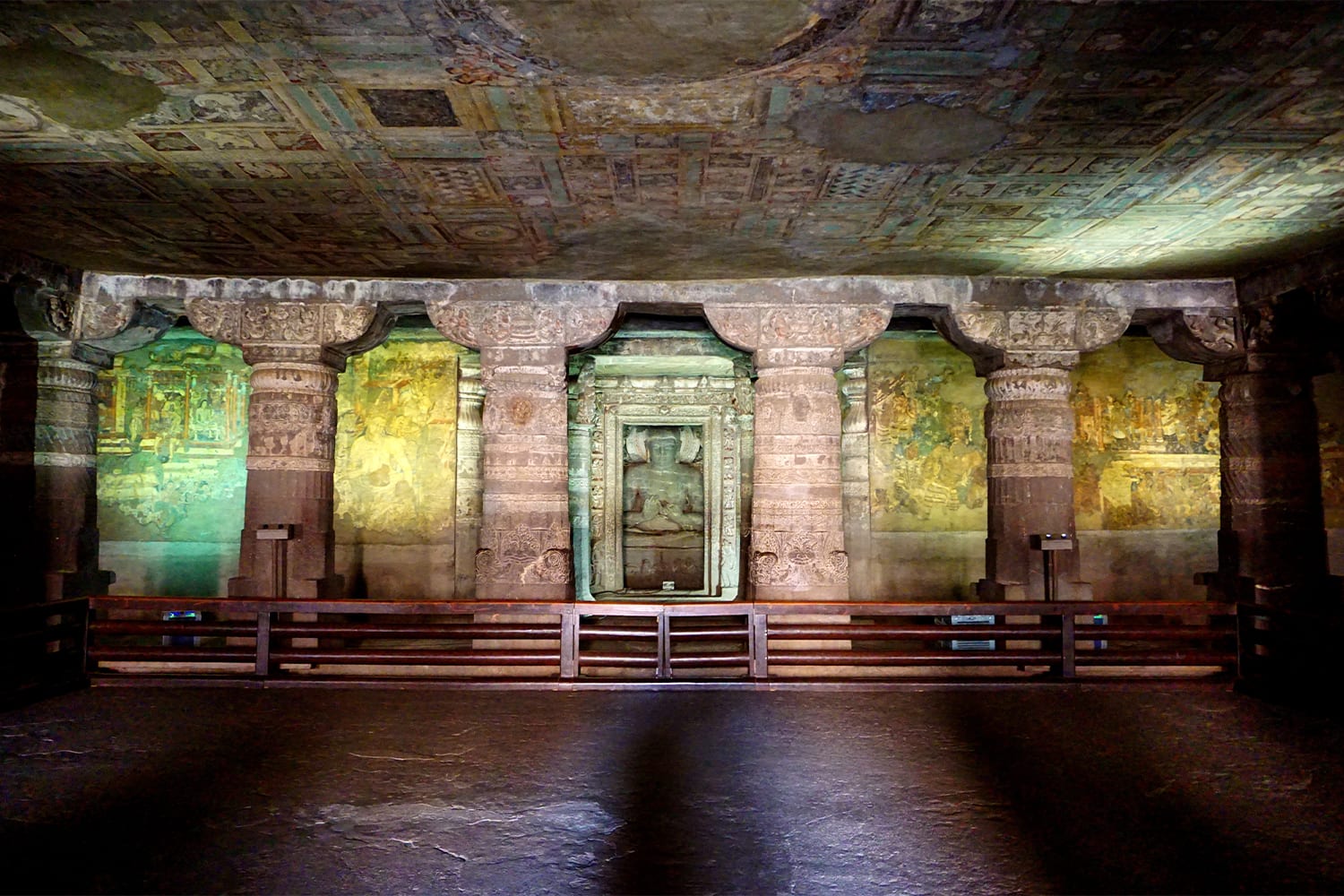
In ancient India, unsigned work was ordinary. Across centuries of painting, sculpture, and temple decoration, individual signatures are strikingly rare, even in some of the most technically accomplished visual art ever produced. The painters of Ajanta, the sculptors of the great South Indian temples or artisans who produced thousands of devotional images across Hindu, Buddhist, and Jain traditions all left no names.
It is bleak, to be erased from time. And considering the socio-economic situation of Ancient India, there were likely elements of exploitation involved in erasure of this extent. But there were also clear spiritual links and benefits for an artist to remove oneself from their creations.
Ahankaar: The I-Maker and the Philosophical Error of the Signature
Ego, ahankaar, means, literally, “I-maker”: the function of consciousness that constructs a sense of separate identity through attachment, preference, and possession. In Samkhya and related Indian philosophical traditions, ahankaar is the source of the thought “I am this, I own this, I did this.” It generates the experience of being a bounded self in a world of other bounded selves (Larson 185–187).
Hindu philosophical pieces on bhakti and devotion note that identification with egoic self is a misidentification of our true nature, the eternal soul. Identifying ourselves with the physical body, its experiences and supposed uniqueness is a misstep that halts spiritual progress.
If the true self, the soul, is a part of God, the source of all form and beauty, then claiming a painting as exclusively “mine” is a philosophical error, a reassertion of the very boundary that genuine perception dissolves. The Hindu aesthetic treatise tradition understood beauty as an emanation of the divine: a glimpse of the underlying reality that transcends material form. For the ancient artist, beauty was a reflection of the divine, and the ecstatic experience of true beauty was considered akin to Brahmananda, the bliss of union with the absolute (Coomaraswamy 28–30).
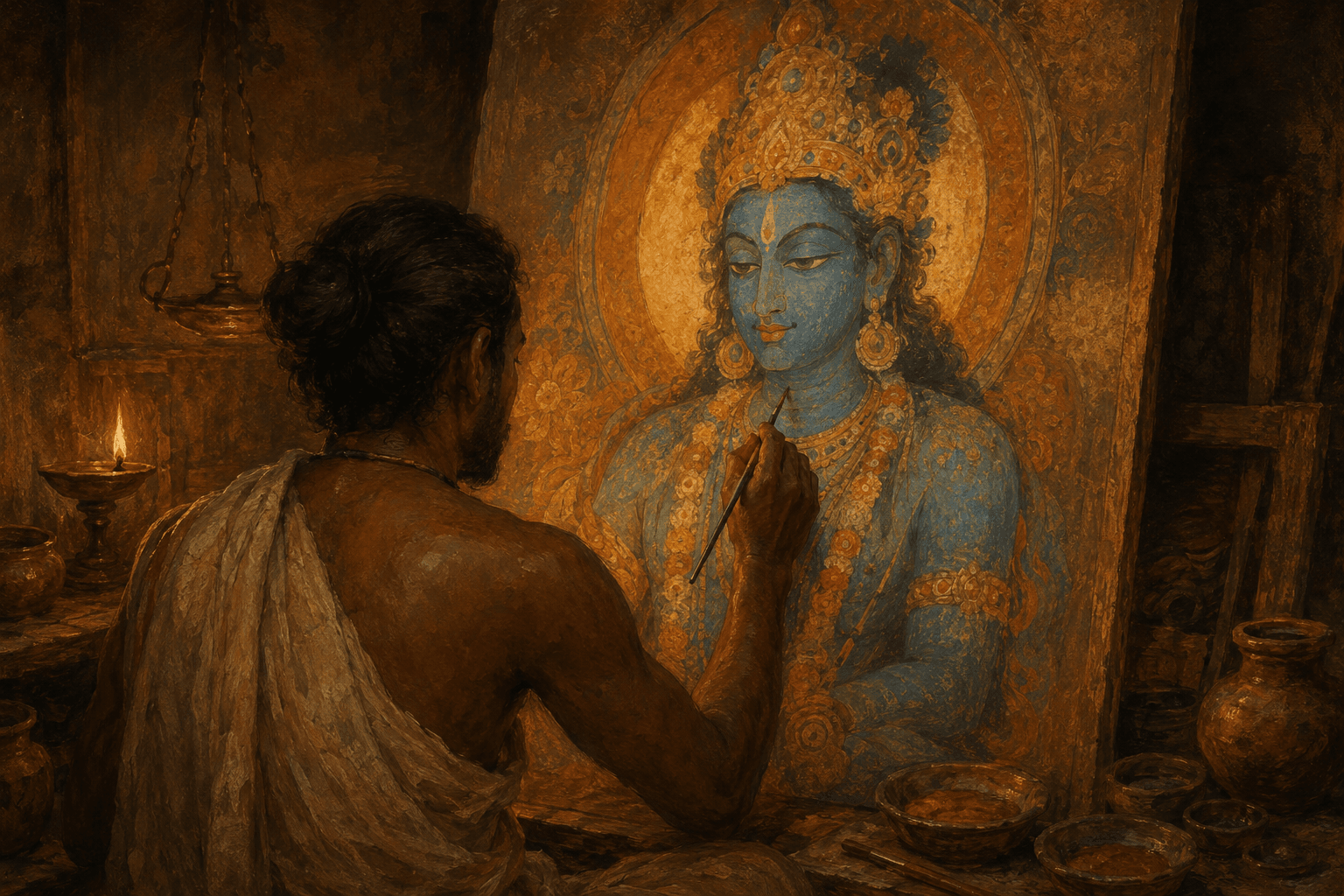
Within that framework, the question “Who is the author of this work?” becomes uncomfortable. If the form arises through you but from a source larger than you, insisting on personal credit mistakes the channel for the current.
And with the belief of the self as the soul, there is also an added implication that the physical self is temporary and insignificant in the broader spectrum, where life is a cycle of rebirth. In this vein, the need to stamp one’s name into history becomes an irrelevant pursuit.
Seva in Art: Why the Bhagavad Gita Makes Signing a Painting a Contradiction
Seva, more simply translated as selfless service, is integral to Bhakti, and mentioned all throughout Hindu scriptures. The process of fulfilling one’s duties while remaining attached only to God and detached from the fruits of one’s actions is a central message of the Bhagavad Gita (2.47). The Bhagavad Gita frames this as the highest form of action: doing what needs to be done without grasping at the reward.
Applied to art-making, this means a painter might undergo years of rigorous training, absorb a complex grammar of iconographic form, and pour concentrated skill into an image, yet understand the entire enterprise as an offering rather than a statement.
The definition has stayed stable into the modern era. Jagadguru Shri Kripalu Maharaj, in his treatise Prem Ras Siddhant, describes seva as the complete submission of body, mind, and words in pleasing the Lord, and holds that devotion belongs to the mind rather than the senses: the same work of the hands becomes an offering or a performance depending only on where the mind attaches.
Stella Kramrisch, the art historian whose scholarship on Indian temple architecture remains foundational, observed that creative work in ancient Indian culture carried the sanction of a sacrament. Artisans were understood as imitating divine forms, tuning themselves to divine rhythms (Kramrisch 1: 37–41). The craftsman who worships his tools during Dussehra, offering incense and flowers to his instruments at the festival, is enacting this understanding: the craft is sacred, the tools are sacred, and the identity of the practitioner is inseparable from the lineage and tradition in which he works.
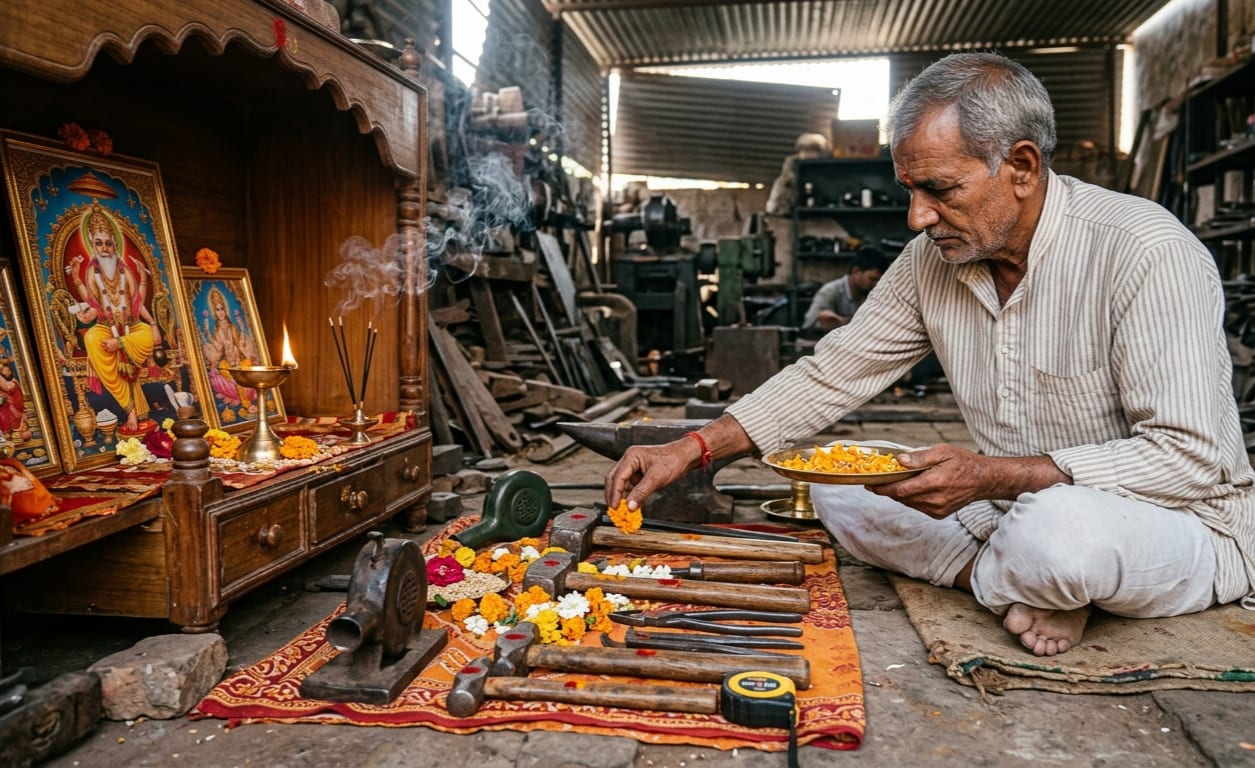
As the subject of most ancient Indian art (the architecture, paintings, music, sculptures) all tend to be related to the divine, it becomes clearer that art making was a kind of seva to the Lord, in spreading his glory and teachings.
The work is dedicated to the deity, the community, the spiritual lineage. To sign it would be to reattach the ego to the fruits of action, and undermine the spiritual discipline that underpinned the creation.
Not Absence, but Abundance
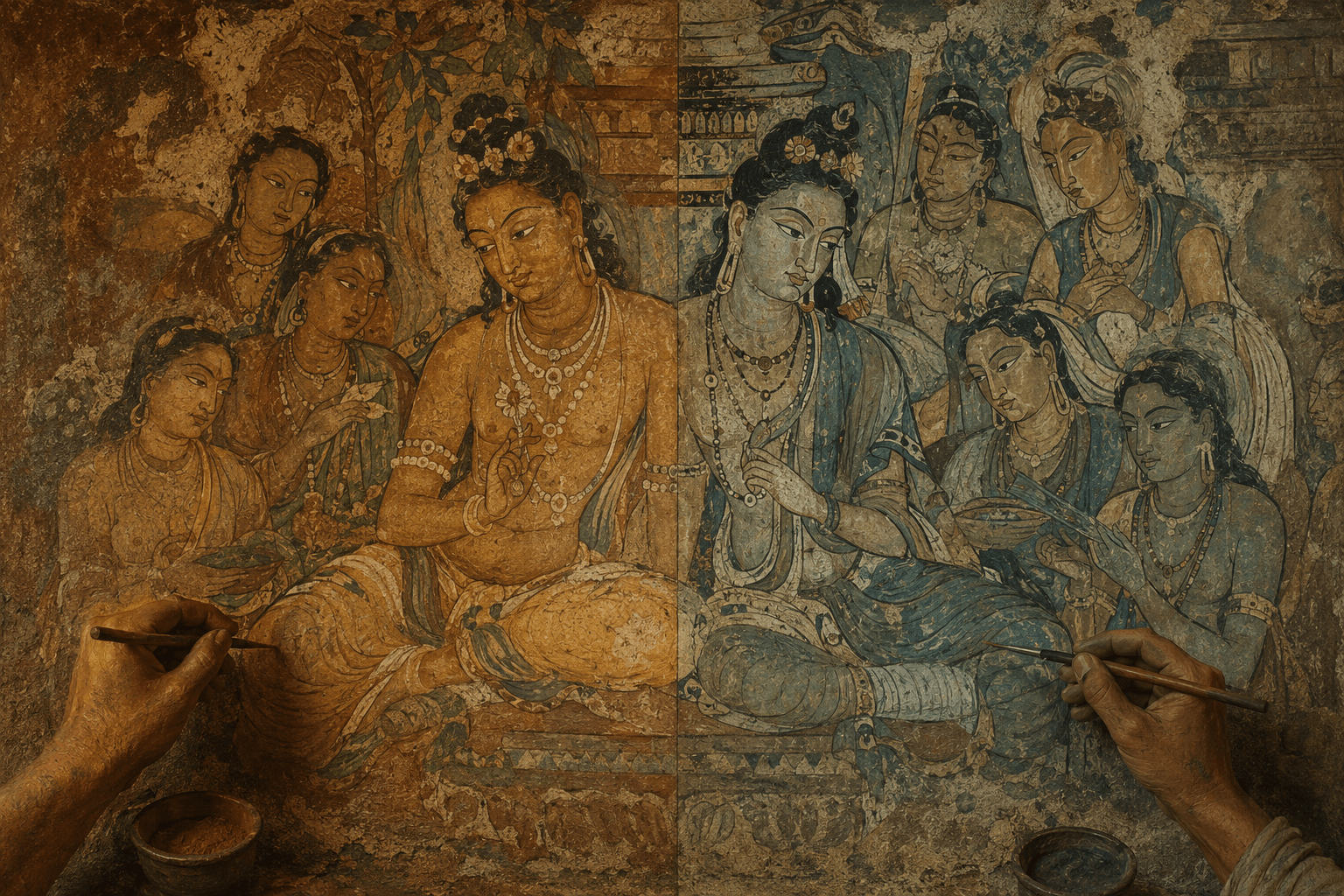
Scholars who study Ajanta can distinguish multiple individual hands in the murals: different approaches to the rendering of faces, drapery, and spatial depth. The individuality is unmistakably present (Behl 88–91). The painter was there, fully. The name was withheld, or simply never considered relevant, because the tradition within which the painter worked had a coherent account of why personal credit was beside the point.
But if the names of the artists were erased, why are the names of so many temple donors set in stone? That tension, between the artisan whose name dissolved and the patron whose name endured, is the subject of the next piece in this series.
Works Cited
Bhagavad Gita
Behl, Benoy K. The Ajanta Caves: Ancient Paintings of Buddhist India. Thames and Hudson, 1998.
Coomaraswamy, Ananda K. The Dance of Shiva: Essays on Indian Art and Culture. Revised ed., Dover Publications, 1985.
Kramrisch, Stella. The Hindu Temple. 2 vols., University of Calcutta Press, 1946.
Kripalu Ji Maharaj, Jagadguru Shri. Prema Rasa Siddhanta (Philosophy of Divine Love). Translated by Bageeshwari Devi, Radha Govind Samiti.
Larson, Gerald James. Classical Sāṃkhya: An Interpretation of Its History and Meaning. 2nd ed., Motilal Banarsidass, 1979.
Sivaramamurti, C. The Chitrasutra of the Vishnudharmottara. Kanak Publications, 1978.