Artist Once Known: The Names That Did Not Survive Ajanta
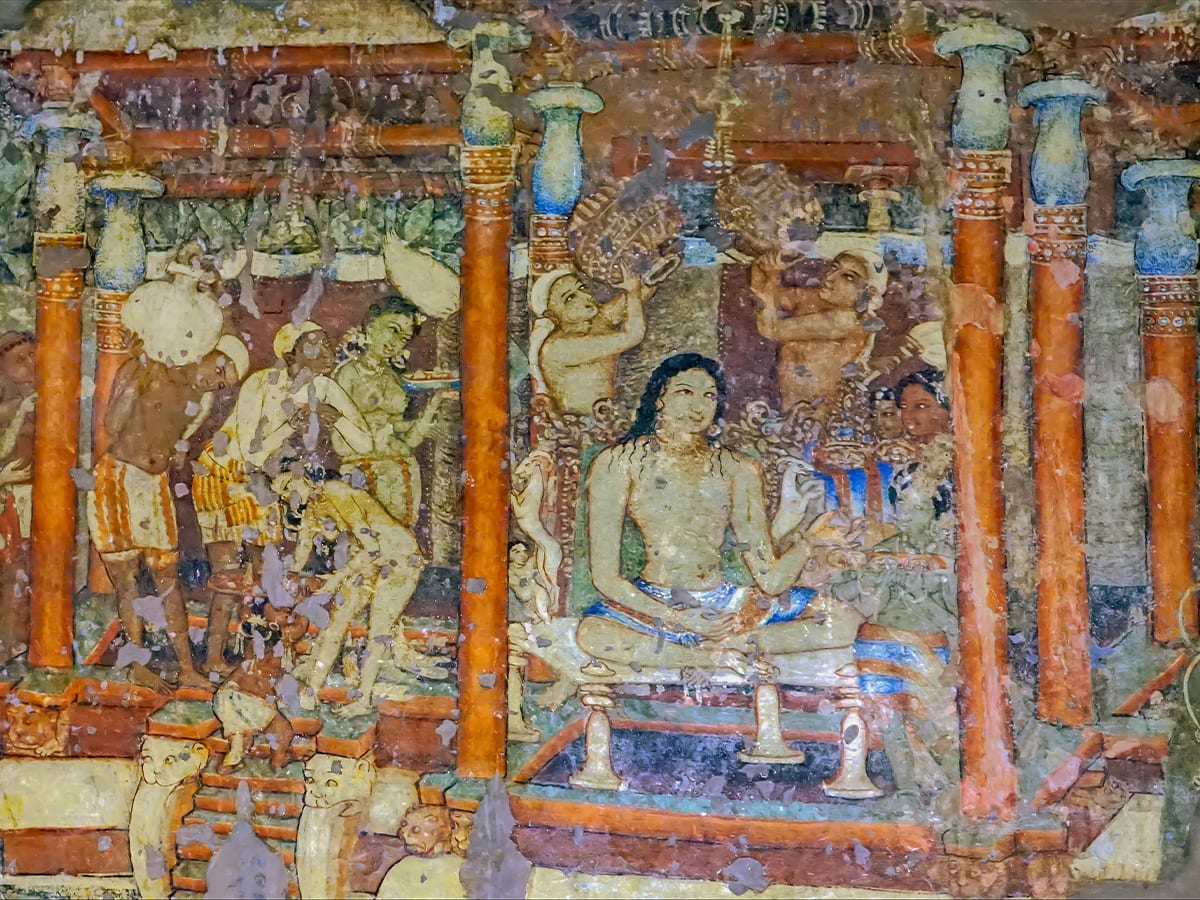
Ancient Indian artistic anonymity was, in many cases, a philosophical choice: the expression of a tradition that understood art as seva, offering, and meditative practice rather than self-assertion. The artist withheld the name because the work pointed beyond the self.
Alongside the anonymity that arose from spiritual intentionality, there is a second kind: anonymity produced by who kept the records, who was considered worth recording, and whose labour was understood as the fulfilment of a social role rather than the exercise of individual talent. These two kinds of anonymity, chosen and imposed, have been collapsed together for centuries under a single museum label.
Ajanta Caves: Some of the most renowned unsigned paintings in human history
In 1819, Captain John Smith of the Madras Regiment, out on a tiger hunt in Maharashtra, stumbled upon a carved facade in a cliff above the Waghora River. Guided by a local shepherd boy pointing toward the rockface, he had found the entrance to a complex of thirty cave monuments cut into a horseshoe-shaped gorge, with some of the most accomplished paintings in human history inside (Spink 3).
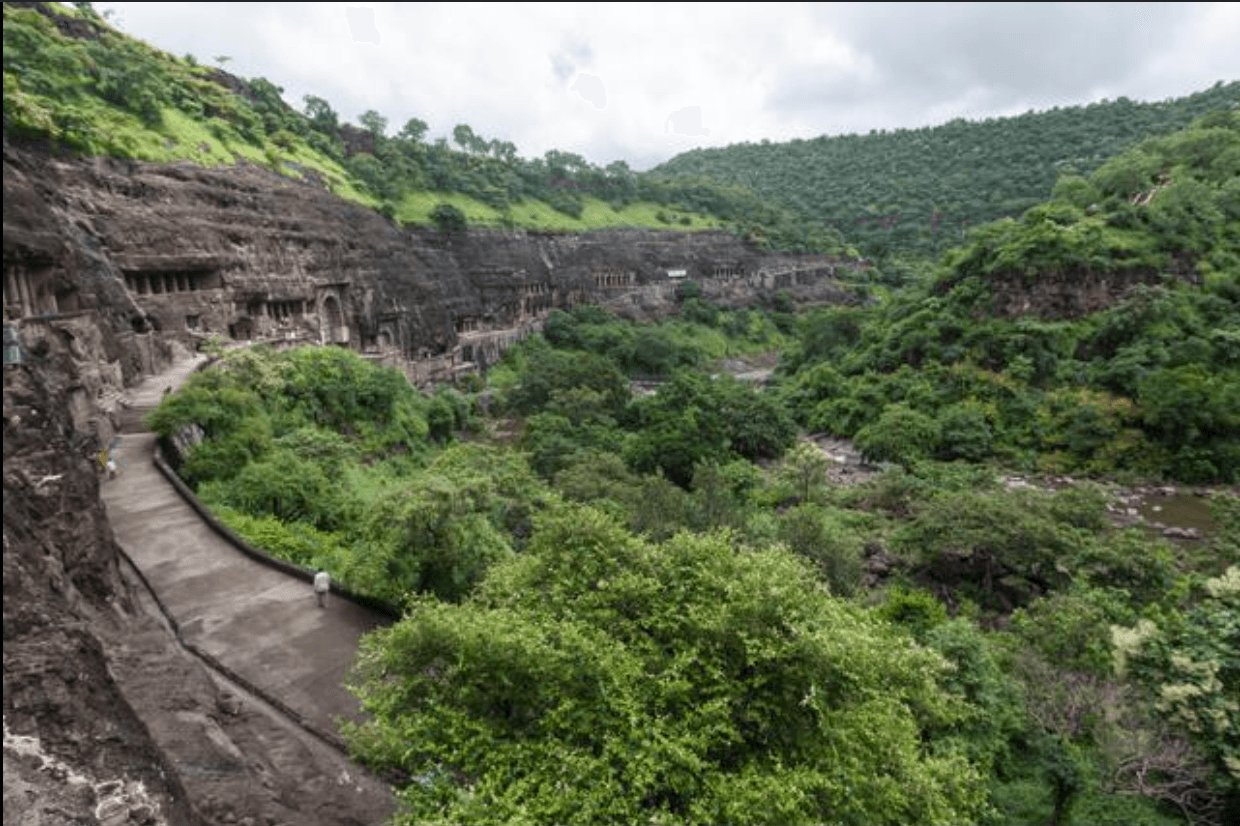
The Ajanta murals, dated from roughly the 2nd century BCE to around 480 CE, depict the Jataka tales: stories of the Buddha’s previous births, in compositions of extraordinary psychological richness. Faces register grief, tenderness, calculation, and longing with a specificity that feels modern. Bodies move through space with weight and ease. Animals are observed with the patience of someone who has spent a great deal of time watching them. The narrative scenes unfold across entire walls, managing dozens of figures simultaneously without losing clarity or emotional focus (Behl 22–25).
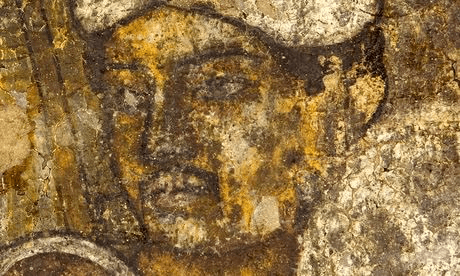
These are masterworks by any serious measure. The names of the people who made them are entirely unknown.
The caves bear no signatures. Contemporary textual sources from the period provide no roll call of painters. What survives is the work, and the distinct trace of individual hands within it. Scholars studying Ajanta can identify at least several painters working in different phases: one whose faces tend toward a particular softness around the eyes, another whose treatment of drapery is more architecturally structured, a third whose figures carry a quality of arrested motion that feels distinctive (Yazdani vol. 1, 44–46). The individuality is there. The names are gone.
This is the Ajanta paradox, and it rewards sitting with rather than resolving quickly. The murals were not anonymous in the sense of being made by an undifferentiated mass. They were anonymous in the sense that the context, monastic, devotional, and patronage-driven, generated no mechanism for recording who, specifically, had painted what. The caves were built and funded by rulers, merchants, and Buddhist communities seeking spiritual merit. The paintings served monks and lay pilgrims in meditation and instruction.
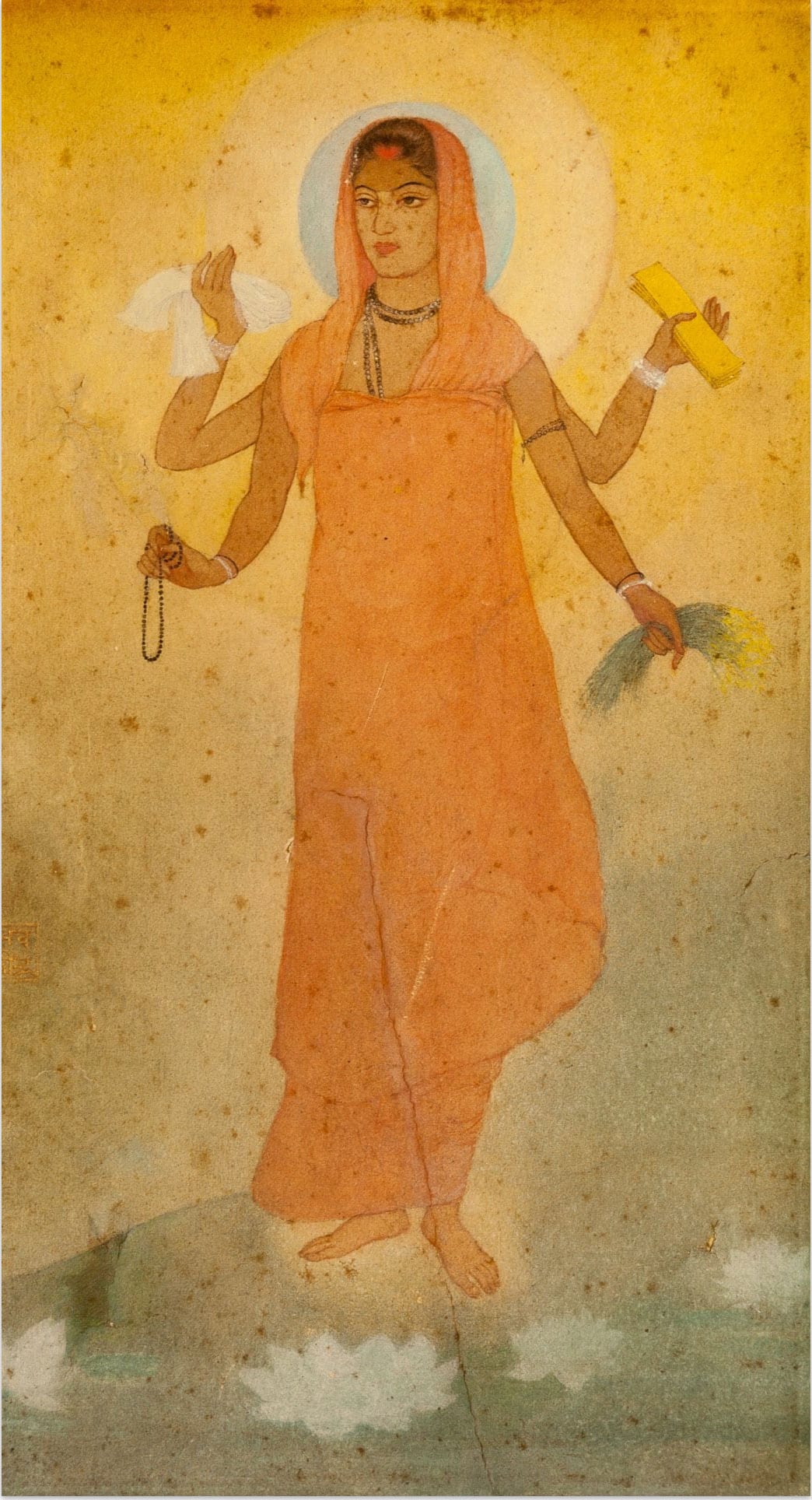
The absence of names has, paradoxically, served Ajanta well. When the caves were rediscovered and studied, first by Smith and later by Indian art historians, the unsigned murals became a cornerstone of Indian national artistic identity precisely because they belonged to no particular person. The art historian Partha Mitter has documented how modern Indian painters, particularly artists of the Bengal School around Abanindranath Tagore, travelled to Ajanta to study and absorb its formal qualities, integrating them into new idioms (Mitter 272–275). Anonymity made the tradition available as a source rather than a rival.
Who Got Named at Ajanta: Donors, Artisans, and the Logic of Inscription
Across the Hindu temple tradition, inscriptions record the names of kings, queens, and wealthy merchants who funded construction, repair, and endowment. They record the deities to whom the structures are dedicated. They sometimes record the names of chief architects: the sthapati, the master builder whose ritual and technical knowledge structured the enterprise (Kramrisch 1: 80–83). What they rarely record, in any detail, are the painters, carvers, and craftspeople whose labour over months and years gave material form to the theological vision.
Though funding a temple or a sacred monument was an act of religious merit-making, there has always been great social capital in making one’s donation known. Even today, the names of donors to modern temples, centres and community centres are noted for all to see. It is a tradition that likely incentivised donation, though for a less noble cause.
The Mughal court ateliers demonstrate that this was a contingent outcome, not an inevitable one. Under Akbar, Jahangir, and Shah Jahan, miniature painters worked within an imperial system that had reasons to track individual talent. The emperor was a patron of specific skills, and the colophons of illustrated manuscripts sometimes recorded the names of painters, calligraphers, and even the craftsmen responsible for the binding. Artists like Basawan, Farrukh Beg, Daswanth, and Payag are known by name precisely because an imperial apparatus found it useful to know them (Beach 48–52). The emperor’s interest in connoisseurship created the conditions for individual attribution.
Remove that imperial interest, and the names disappear. The infrastructure for recording them was not there.
The Hood Museum’s Label Change and Why It Matters
In 2022, the Hood Museum at Dartmouth made a small but significant change to how it labelled works from traditions where individual attribution is absent. It replaced the standard label “Artist Unknown” with a new formulation: “Artist Once Known.”
The change is two words.
“Artist Unknown” carries a specific implication: that there is nothing to know, that the absence in the record reflects an absence in reality. It positions the work as having emerged from an undifferentiated cultural mass, which inadvertently reinforces a long-standing assumption in Western art history that non-Western art is intrinsically collective, functional, and impersonal, in contrast to the individually authored genius-works of the European tradition.
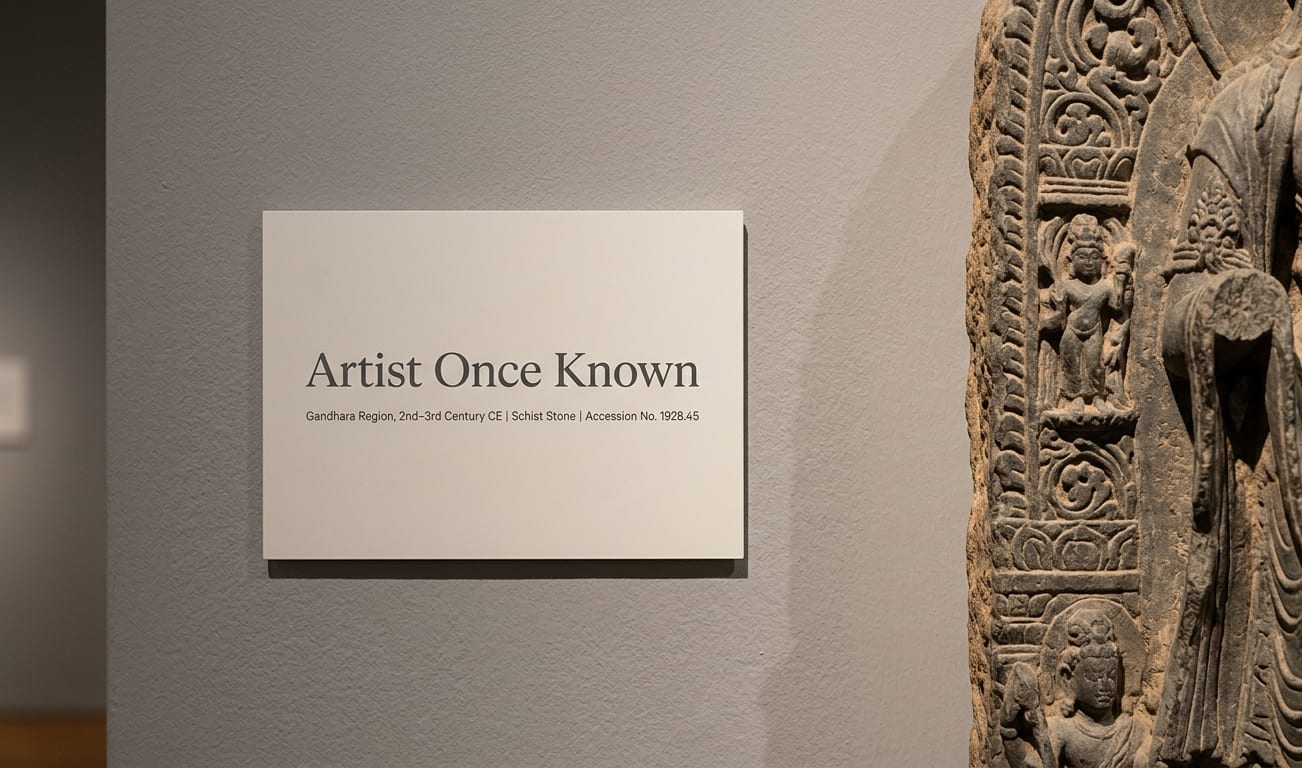
“Artist Once Known” says something entirely different. It acknowledges that there was a person. That person was known to their community, their guild, their patron, their students. The chain of memory was broken: by colonial record-keeping that prioritised different names, by the social structures that determined whose contributions entered the written record, by the simple attrition of centuries. The absence is not ontological. It is historical.
“Artist Unknown” closes the question. “Artist Once Known” keeps it open: it invites the viewer to imagine the maker, to register that the skill and intention in the object originated in a specific person who lived, worked, and died, and whose name the current system of knowledge failed to preserve.
Chosen Anonymity vs Imposed Anonymity: A Distinction That Changes Everything
The painter at Ajanta who worked within a tradition that understood art as seva, who absorbed the spiritual logic of ego-dissolution and offering, who experienced the creation of a Jataka mural as a form of meditation: that painter’s anonymity makes sense within its own framework. It reflects a coherent account of what art is for. Jagadguru Kripalu Maharaj argues in Prem Ras Siddhant that the highest devotion desires nothing at all, not even liberation, and is practised only for selfless divine love. An artist formed by that ideal would have little use for a signature, since to want the name preserved is itself a desire, and the discipline rests on letting desire go. Anonymity, on this account, is not a loss the artist suffers but a renunciation the artist makes.
The Dalit artisan whose craft was indispensable to the visual culture of a temple complex but whose name was excluded from the record because the inscription system tracked donors and deities, and caste hierarchy determined whose contributions merited documentation: that anonymity reflects something else. As Shivaji Panikkar has argued, the erasure of craft workers from the historical record is not a neutral cultural fact but a consequence of who held the power to write history. Contemporary Dalit artists and critics have been explicit about this. The erasure of craft workers’ identities from the historical record is not a neutral cultural fact but a consequence of who held the power to write history (Panikkar 112–114).
Both kinds of anonymity are present in the tradition. The distinction matters most where the two look identical from outside: the same unsigned wall may carry the renunciation of one painter and the erasure of another, and only the social history can tell them apart.
What the Hood Museum’s label change points toward is a practice of looking at anonymous works with more curiosity and less resignation: asking not “who is the artist?” as a dead-end question, but “what kind of anonymity is this, and what does it tell us about the world in which this work was made?”
What Ajanta’s Unsigned Walls Still Offer the Viewer
Ajanta was painted, abandoned, and rediscovered. The names of its painters did not survive the gap. The work did.
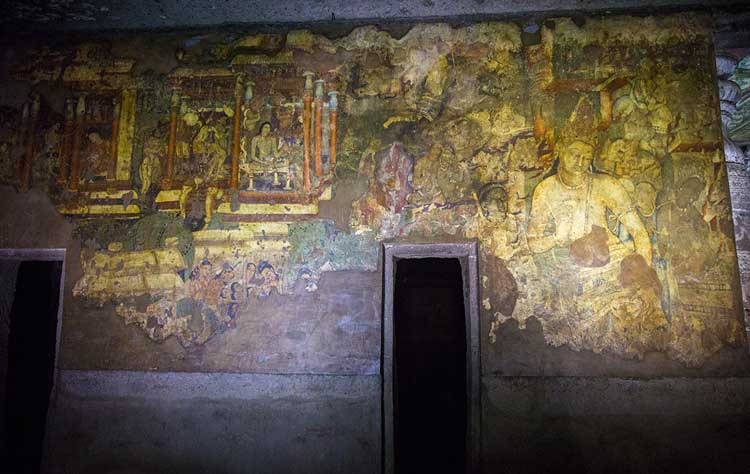
Scholars can now, through careful visual analysis, reconstruct the outlines of individual artistic personalities from the murals: the way a particular painter understood volume, handled the space between figures, or rendered the specific quality of grief in a face. The individuality was always there. The record-keeping system of the 5th century CE simply had no mechanism for capturing it in a form that would survive (Spink 94–96).
There is a particular quality of attention that unsigned work invites. Without a biography to contextualise the piece, without a market value attached to a name, without the critical apparatus that accumulates around a known artist’s output, the work stands more nakedly as itself. The face in the Ajanta mural looks back at you without the mediation of a career. The painted hand reaches toward you without the filter of an auction record.
The image becomes a direct encounter. The maker has stepped aside. The viewer is left face to face with the form, and through the form, with whatever the form was made to reveal.
Whether the painter stepped aside by choice, or was simply never given a place in the record to step away from: that question matters. It is worth asking. And it is worth keeping distinct from the answer.
Works Cited
Beach, Milo Cleveland. The Imperial Image: Paintings for the Mughal Court. Freer Gallery of Art, 1981.
Behl, Benoy K. The Ajanta Caves: Ancient Paintings of Buddhist India. Thames and Hudson, 1998.
Kramrisch, Stella. The Hindu Temple. 2 vols., University of Calcutta Press, 1946.
Kripalu Ji Maharaj, Jagadguru Shri. Prema Rasa Siddhanta (Philosophy of Divine Love). Translated by Vageeshwari Devi, Radha Govind Samiti.
Mitter, Partha. Art and Nationalism in Colonial India, 1850–1922: Occidental Orientations. Cambridge University Press, 1994.
Panikkar, Shivaji K. “Caste, Patronage, and the Politics of Art History.” Towards a New Art History: Studies in Indian Art, edited by Shivaji K. Panikkar et al., Books and Books, 2003, pp. 108–121.
Spink, Walter M. Ajanta: History and Development. Vol. 1, Brill, 2005.
Yazdani, Ghulam, et al. Ajanta: The Colour and Monochrome Reproductions of the Ajanta Frescoes Based on Photography. 4 vols., Oxford University Press, 1930–1955.